
Ultra Gobi AlUla B (121km, 4-days, stage)
121km over 4 days. Your pace. Your journey.
🗓️ JANUARY 13 TO 17, 2027 | 📍 ALULA, SAUDI ARABIA
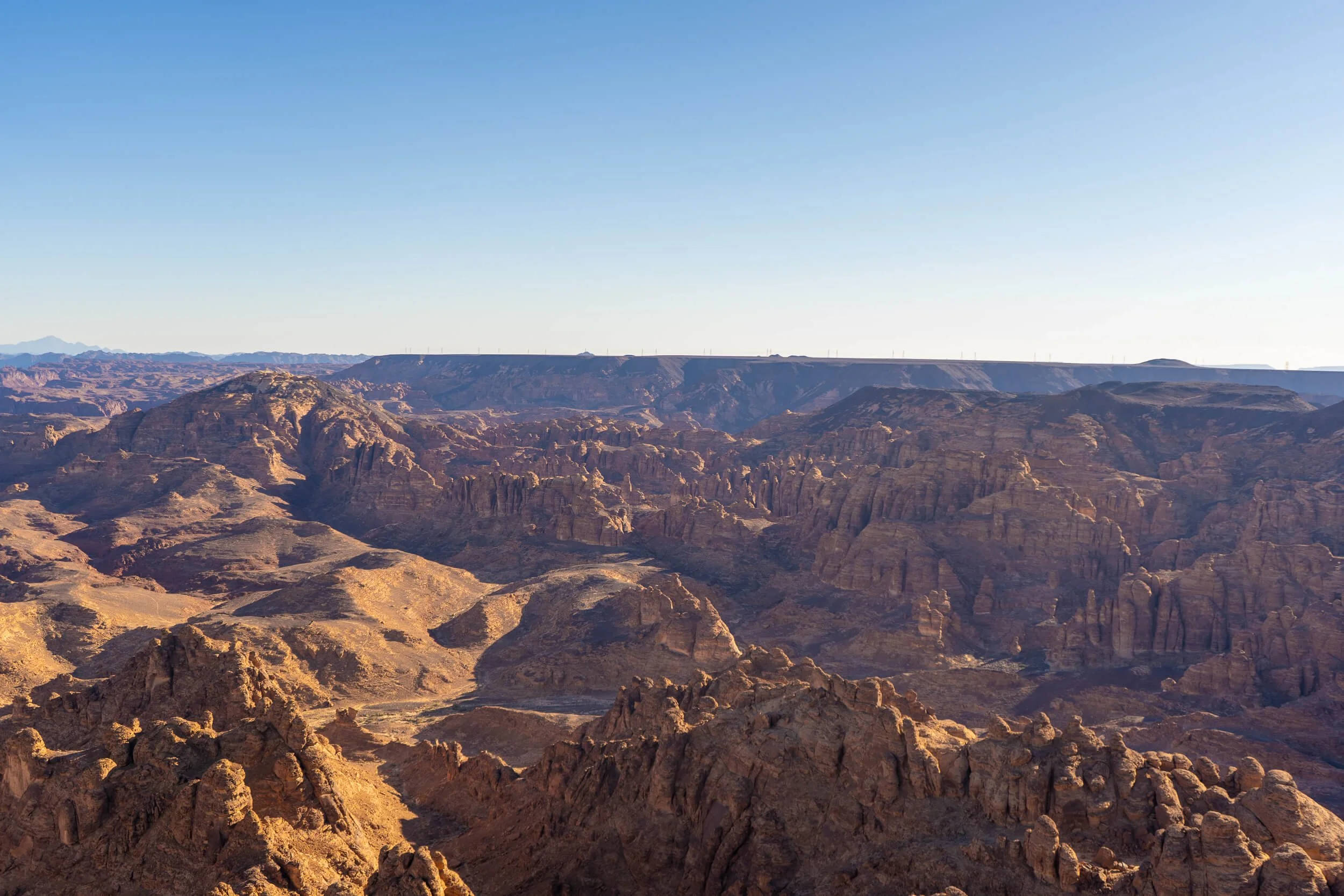
The Ultra Gobi B in AlUla covers 121 kilometers over four days as an individual stage race. Four days through terrain that shifts constantly: open plains give way to sandstone canyons, palm-lined oases, and rock faces marked by 2,000-year-old Nabataean tombs.
This is not about racing for position. It is about covering the distance, experiencing the landscape, and finishing what you started. The B format ranks participants by cumulative time over all four stages, but the real measure is personal: every day in this landscape will stay with you.
Open to runners and trekkers of all backgrounds. No qualifying race required.
At a Glance
Distance: 121km
Format: Individual stage race (4 days, 3 nights)
Stages: 4 stages, each 25 to 35km
Navigation: Marked racecourse
Support: Full camp support. Meals, water, medical, tents provided.
Difficulty: Moderate. Accessible to trekkers and runners with preparation.
Terrain: Sandstone canyons, desert, oases, rocky valleys
The Course
Four stages through the heart of AlUla. Each stage is expected to cover 25 to 35km across changing terrain: flat desert, dunes, palm oases, sandstone formations, rocky valleys. The planned route passes Hegra, Dadan, AlUla, Jabal Ikmah, and Elephant Rock.
The course will be marked. Daily cutoffs allow generous time for running or hiking the full distance.
📎 Final route subject to confirmation. GPX and KML files will be published before each edition.
On the Course
-
Each night, a complete mobile campsite is built along the course. Tents are pitched and ready when participants arrive at the end of each stage. Baggage is transported between camps, so there is no need to carry anything beyond your daily kit.
Participants sleep in individual tents, one per person. The camp includes power, sanitation facilities, and a dedicated logistics team. Local cuisine is served in the evening. Packed lunch for the following day is prepared overnight.
In the morning, the entire camp is dismantled and moved to the next location. By the time you finish the next stage, it is already waiting.
-
The racecourse is marked. Checkpoints are staffed with volunteers and race officials. Medical teams are present on the course and at camp.
The race operates a 24/7 safety and communications system.

Planning & Logistics
-
⚠️ Schedule is preliminary and subject to change.
Jan 13: Check-in, registration, race briefing, opening ceremony
Jan 14: Stage 1
Jan 15: Stage 2
Jan 16: Stage 3
Jan 17: Stage 4. Cutoff and award ceremony
-
All participants check in on January 13. After the final stage on January 17, participants gather for the award ceremony.
Participants arrange their own travel to and from AlUla. The organizing team can assist with accommodation recommendations.

Registration & Pricing
-
Registration Fee: $2,810
Included:Race bib and race pack
Medal and finisher t-shirt
Tent accommodation at desert camps (3 nights)
All meals during the race
Water and snacks at checkpoints
Opening ceremony, award ceremony
Professional race photos and videos
Not included:
Round-trip travel to and from AlUla
Accommodation in AlUla before and after the race
Personal expenses
Travel and medical insurance
-
Eligibility:
Minimum age: 18 years
Individual registration
No qualifying race required

January 2027: The Founding Edition
121 kilometers through 7,000 years of history. At your own pace. Be among the first to experience Ultra Gobi in AlUla.
Results, stories, and race highlights will be shared here after the event.
Destination
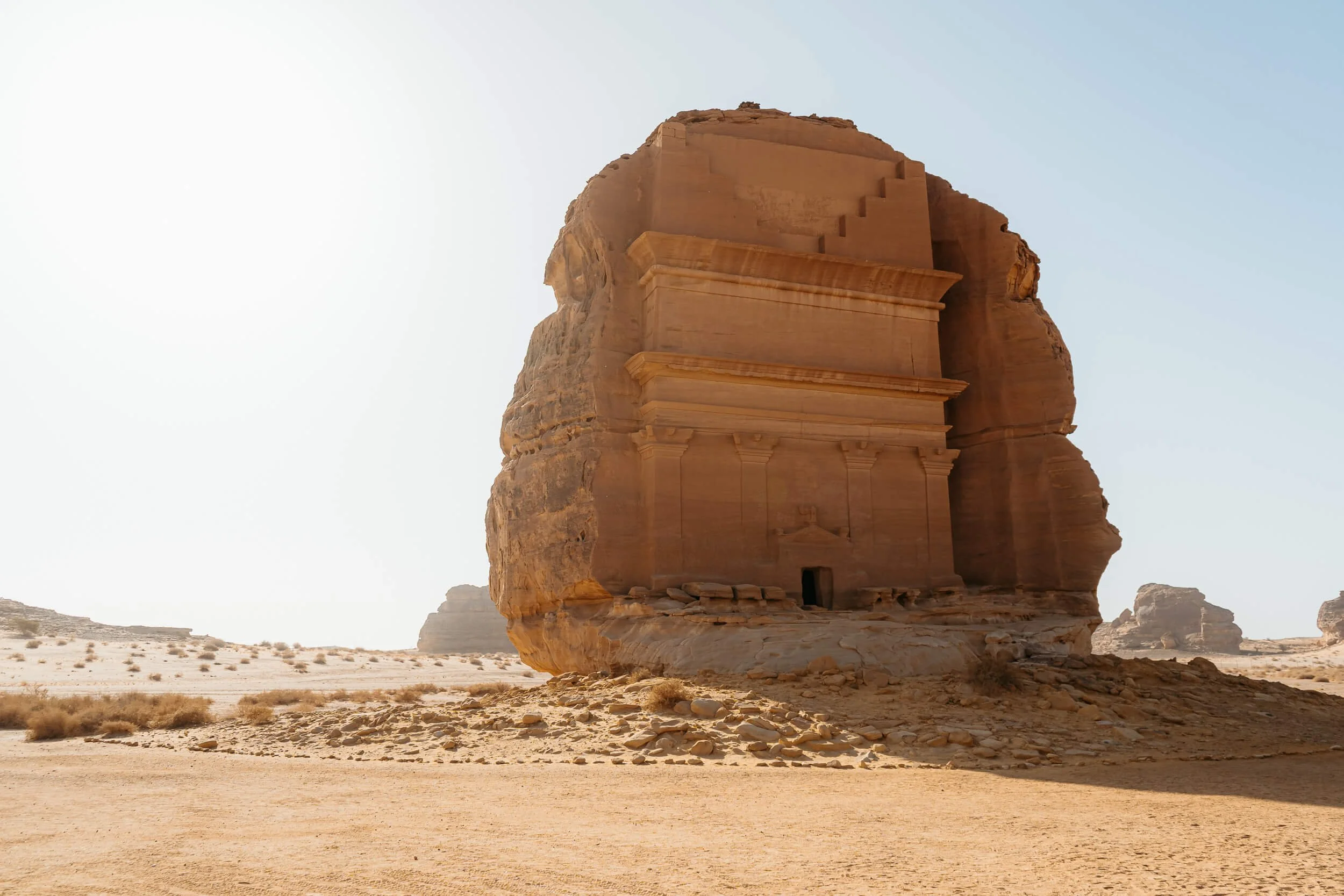
AlUla, northwestern Saudi Arabia. A valley cut between towering sandstone cliffs, home to one of the oldest continuously inhabited oases on the Arabian Peninsula. Over 7,000 years of civilization have left their mark here. The most striking: Hegra, where the Nabataeans carved more than 100 monumental tombs into the rock face. The same people who built Petra in Jordan, only here without the crowds. Beyond the race, there is plenty to explore: a preserved mud brick old town, ancient inscriptions scattered across the landscape, and rock formations unlike anything else on the peninsula.
FAQs
Helpfull downloads (PDF):
-
The next edition of Ultra Gobi AlUla takes place January 13 to 20, 2027
-
Participants from mainland China may sign up via the official mini-program of Ultra Gobi AlUla on WeChat.
◦ Individual entry: Complete registration directly through the mini-program.
◦ Team entry for Ultra Gobi A (minimum 5 members per team): Contact the organizing committee at ultragobiseries@exploring.cn to apply for an exclusive QR code and registration link.
Participants outside mainland China may register via Ultra Signup: https://ultrasignup.com/register.aspx?did=139368
-
Days are mostly between 18 to 21°C, nights can get chilly with temperatures between 3 to 7°C
-
Visa Type: Tourist Electronic Visa (eVisa)
• Eligibility: Citizens of 66 eligible countries across North America, Europe, Asia, Africa and Oceania (including China, Japan, South Korea, Australia, the US, UK, Schengen states, etc.)
• Visa Benefits: One-year multiple-entry, maximum 90 days stay per visit; valid for tourism, events, family visits and Umrah (excluding Hajj)
• Application Process: Online application approval typically within 24 hours
• Official Portal: https://visa.visitsaudi.com/
Required Documents
• Passport bio-page scan (valid for ≥6 months beyond entry date, with ≥1 blank page)
• Recent white-background passport photo (200×200 pixels, ≤6 months old)
• Valid email address
• Credit/debit card (Visa/MasterCard) for payment
Application Advice: Apply at least one month before departure to avoid processing delays
-
Youth Category: Participants must be aged 12 to 18 (born between January 14, 2009 and January 13, 2015). A registered adult guardian (born on or before January 13, 2009) must accompany the minor for the entire duration of the event.
All other categories: Participants must be at least 18 years old (born on or before January 13, 2009). There is no upper age limit.
-
Check-in and race pack collection will take place at AlUla Old Town from 09:00 to 22:00 on January 13, 2027. All participants must collect their race packs in person and present the original valid ID (Passport) used for registration.
-
Included: Event activities, briefing sessions, opening and award ceremonies, on-site logistics, safety support, rescue services, medical services, cultural heritage & environmental protection fees, event branding fees, and standard group insurance arranged by the organizing committee
Not included: Visa fees, round-trip transportation to the venue, accommodation and meals, post-event celebration dinner, optional personal accident insurance, and any losses arising from personal reasons.
-
We've built a clear and flexible refund policy for Ultra Gobi AlUla. Participants who wish to request a refund must submit their application within the specified timeframes. Refunds will be processed strictly according to the timing of the request, as outlined below:
Phase 1: Full Refund Period
Deadline: Before 18:00 (AlUla local time), November 18, 2026
Refund Policy: 100% of the registration fee will be refunded.
Phase 2: Partial Refund Period
Period: From 18:00, November 18 (AlUla local time), 2026 to 18:00, December 10, 2026
Refund Policy: 30% of the registration fee will be deducted as event preparation costs. The remaining 70% will be refunded.
Phase 3: No Refund Period
Effective From: 18:00 (AlUla local time), December 10, 2026 onwards
Refund Policy: Participants will be deemed to have voluntarily withdrawn from the event, and no registration fee will be refunded.
All participants are responsible for obtaining their own travel documents, including passports and visas. If a participant is unable to enter the host country (Saudi Arabia) for any personal reason, including but not limited to failure to obtain a visa or non-compliance with passport or visa requirements, the Organizing Committee shall bear no legal responsibility. Refunds, if any, will be handled strictly in accordance with the policy above.
For any inquiries, please contact: ultragobiseries@gmail.com
-
Direct race category/distance changes are not permitted.
If you wish to switch race category, please first apply for a refund for your original entry, then re-register for your desired race.
-
Route maps will be released around September 2026. Please follow the official Ultra Gobi website and WeChat Official Account for updates.
-
• Ultra Gobi 400KM: 139 hours
• Ultra Gobi A+ 121KM: To be announced alongside route maps
• Ultra Gobi A 121KM: To be announced alongside route maps
• Ultra Gobi B 121KM: To be announced alongside route maps
• Ultra Gobi C 30K: To be announced alongside route maps
• Ultra Gobi Youth 90KM: To be announced alongside route maps
-
Pre-event Luggage:
Participants may send personal belongings to their pre-booked hotels. The organizing committee does not provide pre-event luggage storage service.
General Rules for On-course Luggage:
Only non-competition personal items are accepted. Fragile, flammable, explosive, valuable, prohibited, oversized and overweight items are strictly forbidden. The organizing committee reserves the right to reject non-compliant luggage. All stored items must comply with specified size and weight limits; detailed specifications will be announced separately.
Luggage Service by Category
Ultra Gobi 400KM
◦ Start & Finish Storage: Official storage boxes will be provided at the start. Maximum weight: 10.5kg. Fragile and corrosive items are prohibited. All luggage will be transported to the finish collectively after the race starts for collection upon race completion.
◦ Rest Station Storage: Participants will receive official storage boxes at check-in. Please pack supplies, attach labels and seal boxes as required. One box per participant per rest station, for approved race supplies and personal gear.
Ultra Gobi A+ 121KM
Each participant will receive one storage box and one storage bag during the mandatory gear check.
◦ Start & Finish Storage: Only the storage bag can be used at the start. Clearly label all items before handover. Bags will be delivered directly to the finish line.
◦ Change Point Storage: Use the storage box after gear check. Place supplies and gear inside, attach name labels and seals. Boxes will be transported to change points for rest and gear change, then delivered to the finish line.
Ultra Gobi A 121KM / B 121KM / C 30KM / Youth 90KM
Luggage check-in is completed during on-site registration.
Official storage bags or boxes will be provided. Please clearly mark your name, race number and category on your luggage.
All luggage will be counted, sealed and transported to the corresponding race camps. Luggage is stored in designated camp areas, and participants may retrieve their belongings with valid race credentials during designated hours.
After the event, please collect your luggage at the designated location within the specified time. Unclaimed items will be handled in accordance with lost property regulations.
Liability Notice
The organizing committee only provides luggage storage and transfer services. It shall not be held responsible for the loss or damage of valuables inside stored luggage. Please do not place valuables or important documents in checked luggage.
-
Power Supply: Diesel generators provide power for mobile phones, walkie-talkies, cameras, headlamps and other devices. Each large tent has a maximum power load of 3kW. High-power appliances (including but not limited to water heaters, oxygen concentrators and foot baths) are prohibited. One power strip is provided per tent; please bring your own extension cords.
Hot Water: Water boilers are available. Please refer to the published opening hours.
Drinking Water: Water refill stations are set up in camps and checkpoints. Please bring your own water containers.
Meals: Breakfast and dinner are served in the dining tent. Please queue up to collect meals.
Restrooms: Portable toilets are available in camps and checkpoints. There are no fixed restrooms along the race route.
Waste Disposal: Waste bins and collection vehicles are available throughout the camp.
Fire Safety: Fire-fighting equipment is installed around the camp. Do not move or block such equipment.
-
Team rankings will be updated after each race stage. The total team time is the sum of results from all three stages. Final team rankings are determined by total time (faster times rank higher).
If a participant is deemed invalid in the Ultra Gobi A 121KM Team Race, his/her results will be voided and disqualified from team rankings. If the participant was the team’s 3rd-place finisher, all daily team rankings will be recalculated based on the new 3rd-place result and average age.
Participants who are medically forced to withdraw retain their personal results and will still be counted in daily team rankings.
A team with fewer than three valid participants will have an invalid total result.
Calculation Rules
• Individual daily result: Final race time including time penalties and mandatory rest periods.
• Team daily result: The time of the team’s 3rd finisher (minus female time allowance) plus age adjustment.
Note: Items not applicable (female time allowance, time penalties, mandatory rest periods, age adjustment) will not be included in calculation. Please refer to the official race regulations for full details.
-
Rankings are based solely on the categories listed above. No separate age-group awards will be provided.
-
Final results will be verified in accordance with official race rules.
Awards are presented as follows:• Ultra Gobi 400K, Ultra Gobi A+ 121K & Ultra Gobi B 121K: Top 3 male and female finishers.
• Ultra Gobi A 121KM: Top 3 teams in the Business School Group and Open Group respectively.
• Ultra Gobi C 30KM: Top 3 male and female finishers.
• Ultra Gobi Youth 90KM: Top 3 teams.
All final rankings are subject to the official results released by the organizing committee.
-
The Shackleton Award is exclusively available to official group delegations (Business School groups and Open groups).
Eligibility Requirements
• A delegation must have at least 5 participants registered for Category A and Category B.
• All participants of Ultra Gobi A and Ultra Gobi B must finish the race within the official cut-off time, achieving a 100% completion rate (no withdrawals and no use of any means of transportation).
Individual entrants and independent teams are not eligible for this award.
The first-stage experience segment of Ultra Gobi A will be counted towards the completion rate for the Shackleton Award.
-
Advance booking is very necessary
• Background: AlUla is a world-renowned top tourist destination. January 2027 falls in the peak tourist season. Combined with a large influx of event participants, hotel rooms will be extremely limited.
Booking Platforms
• Booking.com: Offers the widest range of accommodation options.
• Trip.com: Supports Chinese language interface and customer service.
• Agoda / Expedia: Mainstream international platforms with regular promotional packages.
• Airbnb: Ideal for boutique homestays and long-term rentals.
Booking Tips
• Preferred Areas: Prioritize properties around AlUla Old Town, Winter Park and Elephant Rock.
• Transportation: Choose accommodation within a 1-hour drive from the core event zone. If local rooms are fully booked, you may consider Medina (around a 3-hour drive). Please arrange intercity transportation on your own.
• Policy Preference: Select properties with free cancellation to mitigate risks caused by itinerary changes.
-
Clothing & Footwear:
The temperature in mid-January in AlUla ranges from 10°C to 20°C with a large diurnal temperature difference. We recommend long-sleeve quick-dry tops, windproof jackets and warm fleece layers for cold nights. Bring comfortable hiking shoes and professional trail running shoes. A headscarf or scarf is advised to block sand and wind, and for use when entering religious sites.
Essential Items:
• Sun protection: High-factor sunscreen (SPF50+), sunglasses, sun hat, lip balm and moisturizer (the local climate is dry).
• Power adapter: UK standard 3-pin square plug (220V).
• Common medicines: Gastrointestinal medicine, cold medicine, painkillers and adhesive bandages (please prepare your own).
• Electronic devices: High-capacity power bank.
• Currency: A small amount of Saudi Riyal (SAR) cash for small payments. Visa and MasterCard are widely accepted at major venues.
-
Car Rental (Recommended)
Rental counters for Budget, Lumi and other companies are available at the airport.
Required documents: Original Chinese driver's license + English translation, plus International Driving Permit (IDP).
Chartered Car Service
If you are not familiar with local driving, you may book a car with a driver for flexible travel arrangements. For reference: Alula Shuttle
Taxi Service
A limited number of taxis are available at the airport. Some hotels offer paid airport pick-up service; please enquire in advance.
Ride-hailing Apps
◦ Kaiian: The top-rated ride-hailing app in Saudi Arabia
◦ Darb AlUla: Carpool app officially recommended by Experience AlUla
◦ Careem: Leading super app across the Middle East, available in major Saudi cities
◦ Uber: Also operational in AlUla, but with fewer vehicles and longer waiting times.
Public Buses
◦ Local public buses connect Eskan, Al Jadidah, Aziziya and other areas, departing every 30 minutes.
4
◦ Sightseeing hop-on hop-off buses depart from Winter Park and cover major scenic spots. Please check the official Experience AlUla website for operating hours.
◦ Special Reminder for the Event Period: The organizing committee will arrange official shuttle buses at designated stops during the event. Please refer to the event schedule for shuttle details.
-
General Rules: Dress appropriately out of respect for local culture.
▪ For female visitors: Headscarves and abayas are not compulsory. Clothes should cover shoulders and knees; overly revealing or tight outfits are not recommended.
▪ For male visitors: Long trousers are preferred; shorts are discouraged in public areas. Wear sleeved tops and avoid going bare-chested.
▪ Event Attire: Professional trail running gear is permitted during the race. Please change into loose clothing that covers shoulders and knees once you leave the race route.
-
Strictly Prohibited Acts
• Alcohol: Saudi Arabia enforces a nationwide alcohol ban. Carrying, purchasing or consuming any alcoholic beverages is illegal and will result in severe penalties.
• Drugs: Possession of any drugs is strictly prohibited and punishable by law.
• Pork products: Pork and non-halal food are not allowed to enter the country.
Behaviour in Public
• Do not smoke in non-smoking areas (follow no-smoking signs).
• Avoid intimate behaviour with members of the opposite sex in public.
• Refrain from discussing sensitive religious topics or making comments about the royal family.
• Remove your shoes and keep quiet when entering mosques. Female visitors need to cover their hair.
• Use your right hand for handing over items and shaking hands, as the left hand is considered unclean locally.
Photography Rules
• Do not take photos of local residents, especially women, without permission.
• Photography is forbidden at royal palaces, military facilities, government buildings and foreign embassies.
• Tripods are generally not allowed at archaeological sites.
• Drones: Tourists are not permitted to fly drones in Saudi Arabia. Only Saudi citizens and residents with official permits may operate drones.
-
Saudi Arabia has carried out remarkable reforms in recent years. Female travelers are well respected and the country is generally safe. Women may travel alone, check into hotels and rent cars without a male guardian.
Avoid travelling to remote areas alone at night. Stay vigilant and keep your personal belongings safe in public places.