Ultra Gobi at services fair “CIFTIS”: CEO Qu Xiangdong on Taking the Race Beyond China
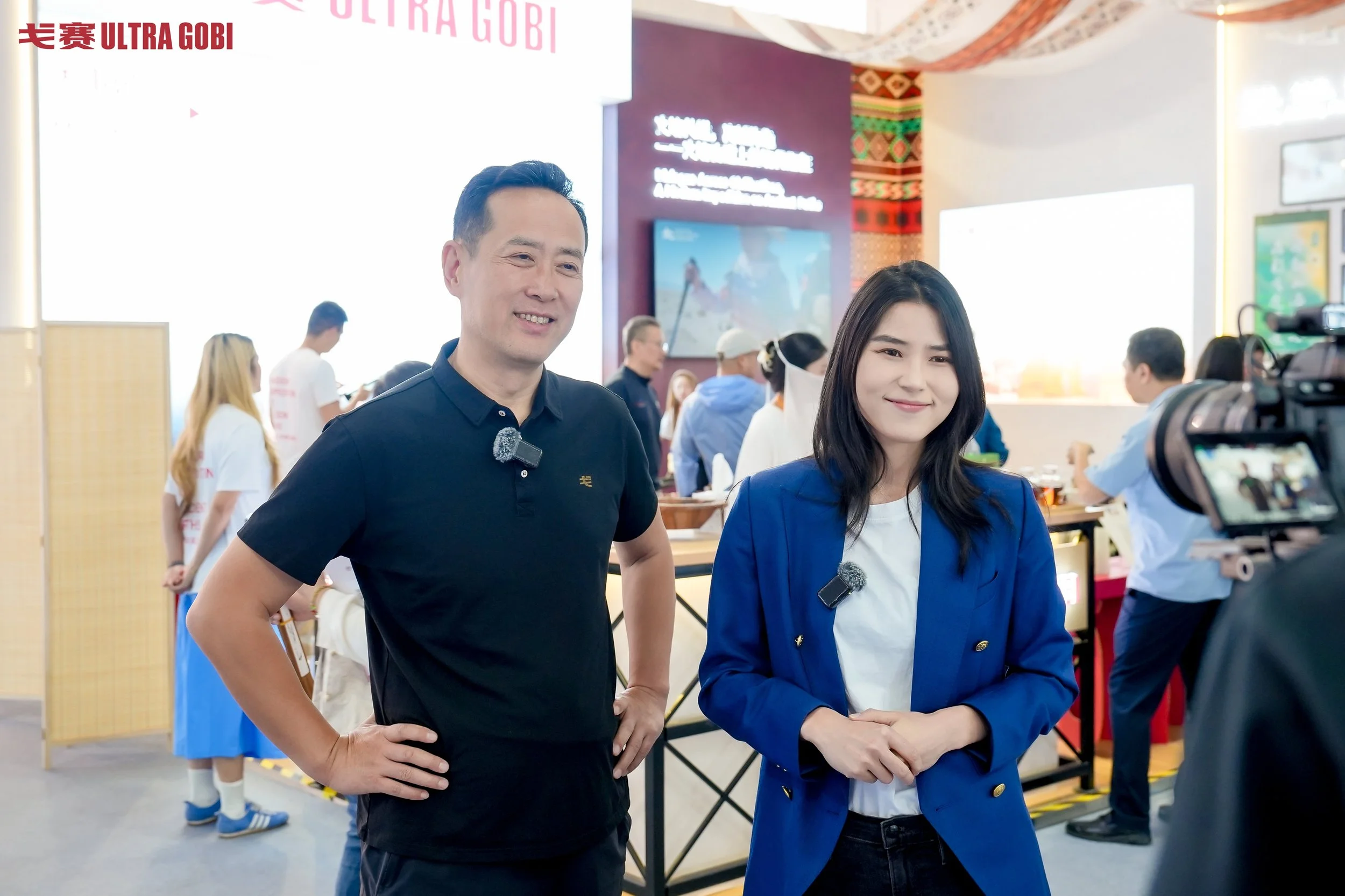
The founder of Ultra Gobi, Qu Xiangdong, spoke to CGTN at Beijing's 2026 services fair, ahead of the first Ultra Gobi race outside China, in AlUla, Saudi Arabia.
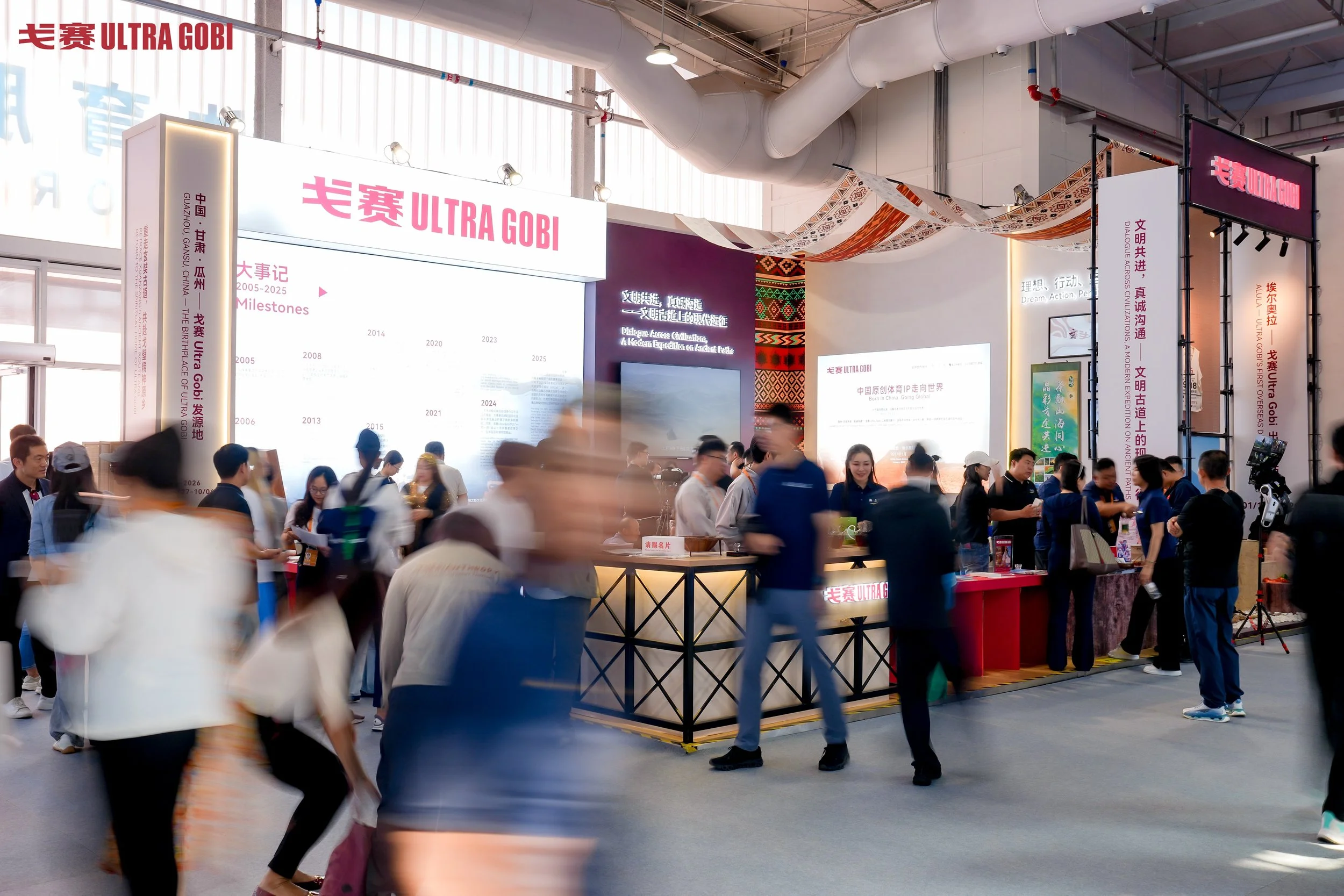
On the floor of the 2026 China International Fair for Trade in Services (CIFTIS), CGTN reporter Yu Hongyu walked past humanoid robots, artificial intelligence systems and financial technology, then stopped at the Ultra Gobi stand. The fair ran from 9 to 13 September at Shougang Park in western Beijing, a former steelworks that now hosts one of the country's largest gatherings for trade in services. Among the machines and the software, Yu found a footrace that has crossed the Gobi Desert for twenty years.
Why going abroad now
Yu put the plain question to founder Qu Xiangdong: after two decades at home, why go global now?
"I think going global is not like a war we must fight. It's not something we are forced to do," Qu said. "For industry like ours, expanding overseas is driven by a new opportunity and changing needs, rather than some pressure."
He tied the move to how sport, culture and travel have become part of daily life for many Chinese runners, who now want to see other landscapes and other histories for themselves. "As China becomes more connected with the world, Chinese lifestyle and original sporting events will naturally travel with it," he said.
What it takes to expand internationally
Asked what lets a Chinese company succeed in a foreign market, Qu did not reach for logistics or budget. He reached for culture.
"The most important capability is the ability to understand and communicate across different cultures, to approach different cultures with equality, respect, and openness, and to find a common ground while respecting our differences," he said. "Culture may seem intangible, but cultural understanding is a very real strength."
That answer fits the race he built. The Ultra Gobi Series began in 2006 and starts each year from Dunhuang, the Silk Road oasis town in Gansu Province, on the western edge of the Gobi in China's northwest. Runners follow ground once crossed by the monk Xuanzang on his route to India between 629 and 645 CE. The 2025 edition, the twentieth, drew more than 5,000 participants.
The first international stop for the event series: AlUla
The first race outside China keeps that logic. Ultra Gobi AlUla runs from 13 to 20 January 2027 in AlUla, a desert region in the northwest of Saudi Arabia, north of Medina. AlUla holds Hegra, the country's first UNESCO World Heritage Site, a city carved by the Nabataeans who guided and taxed the caravans of the ancient incense trade. Two deserts, two ends of the same old network of routes. The race that traces China's Silk Road now sets a course along Arabia's.
Qu made the same point in his own words at the fair, and it has been the line under Ultra Gobi for years: the race stands for sincere communication and shared cultural progress. Taking it to AlUla is that idea put on the ground, in a second desert, for runners who will not all speak the same language at the start line.
The full interview aired on CGTN on 10 September, filed by Yu Hongyu from Shougang Park.