 Image 1 of 8
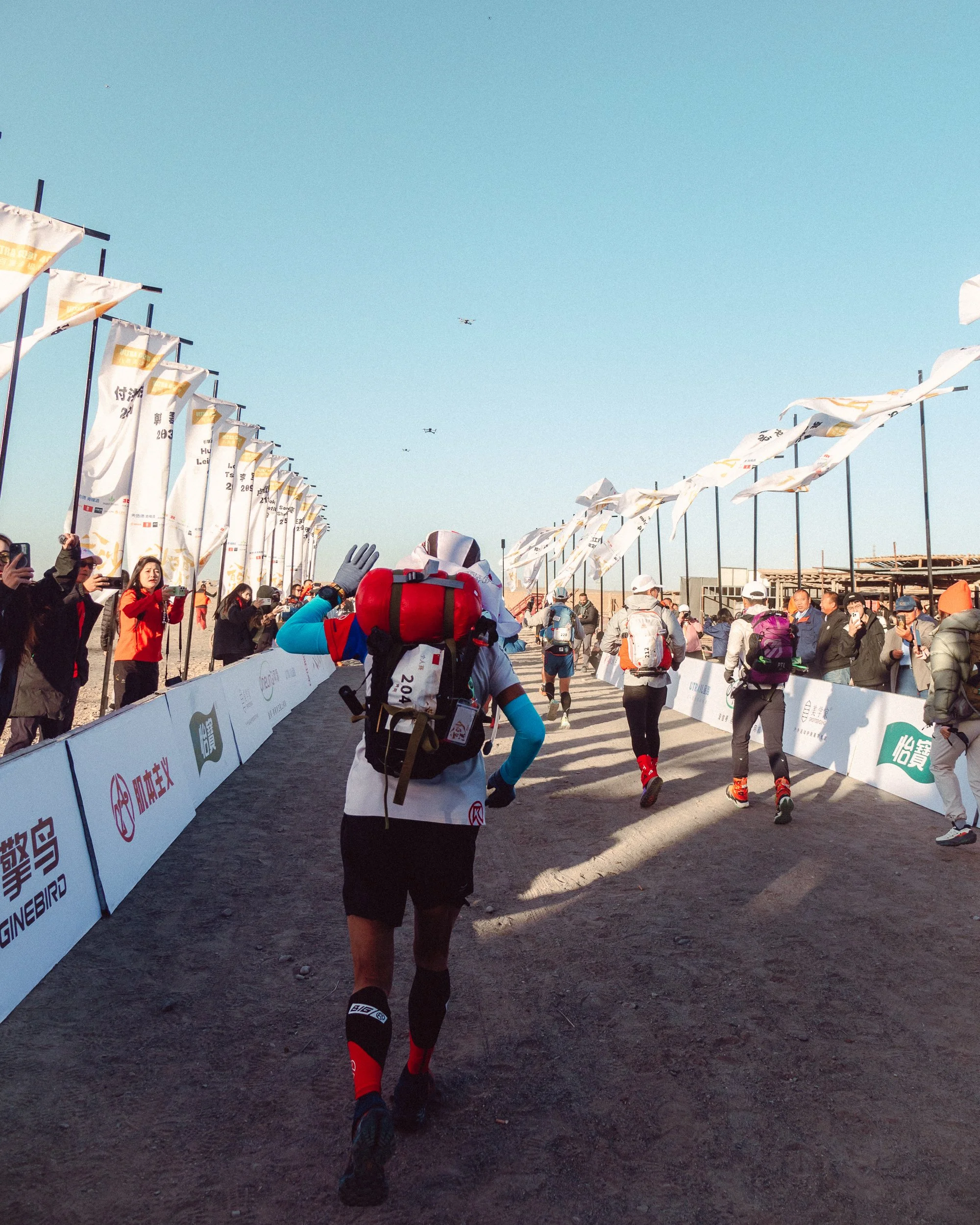 Image 2 of 8
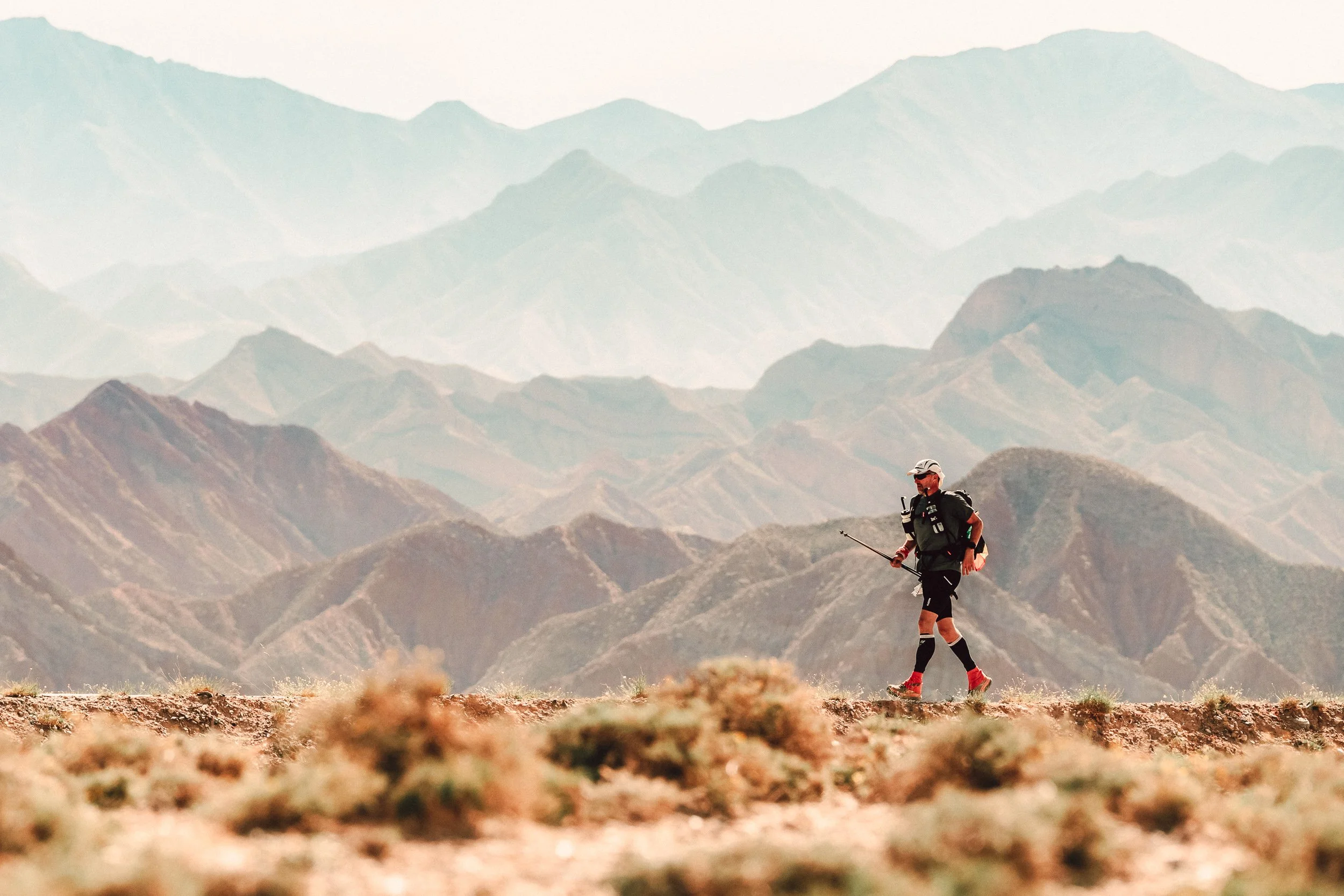 Image 3 of 8
 Image 4 of 8
 Image 5 of 8
 Image 6 of 8
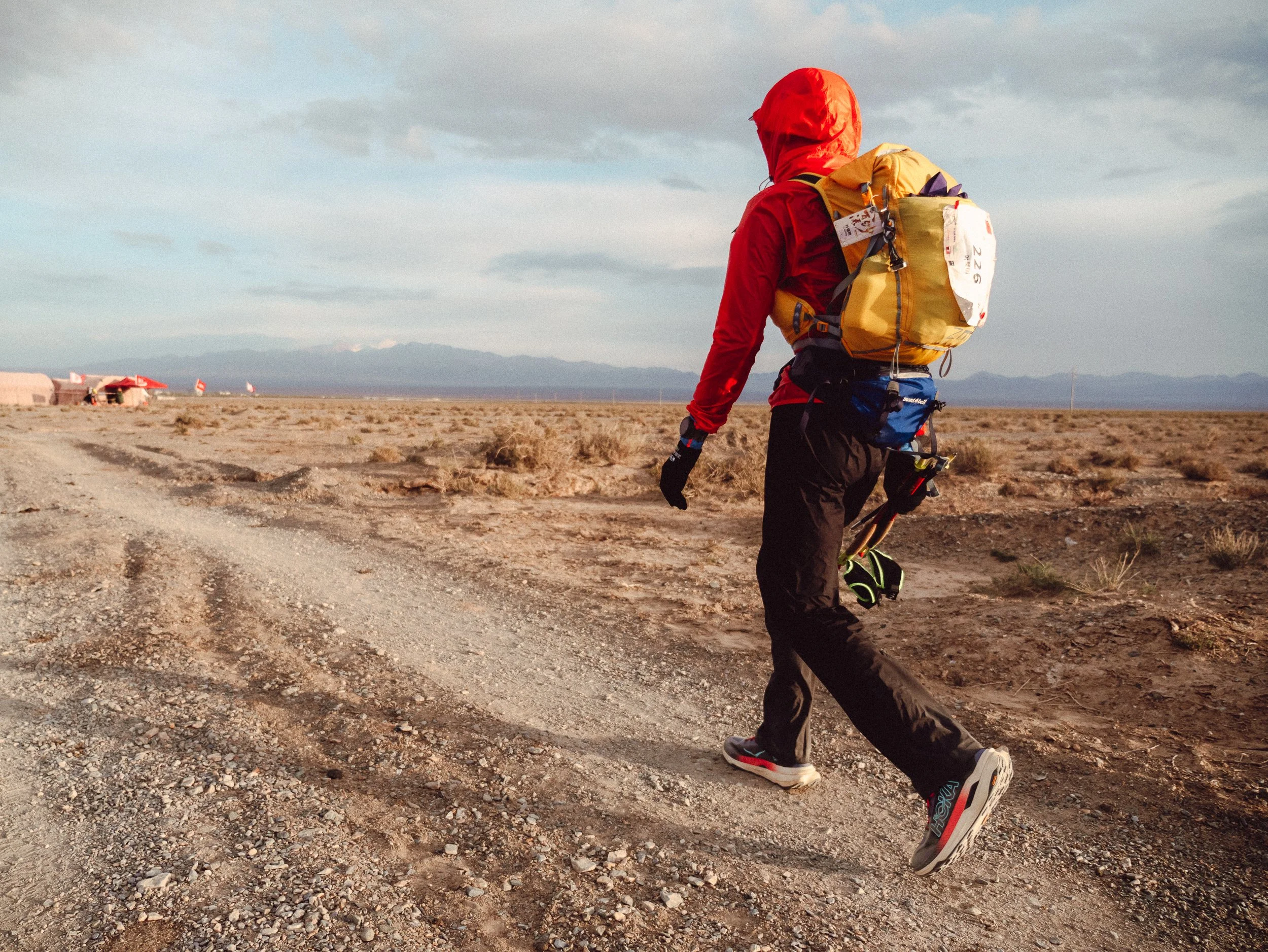 Image 7 of 8
 Image 8 of 8
🗓️ NEXT EDITION: ANNOUNCEMENT SOON | 📍 GOBI DESERT, CHINA
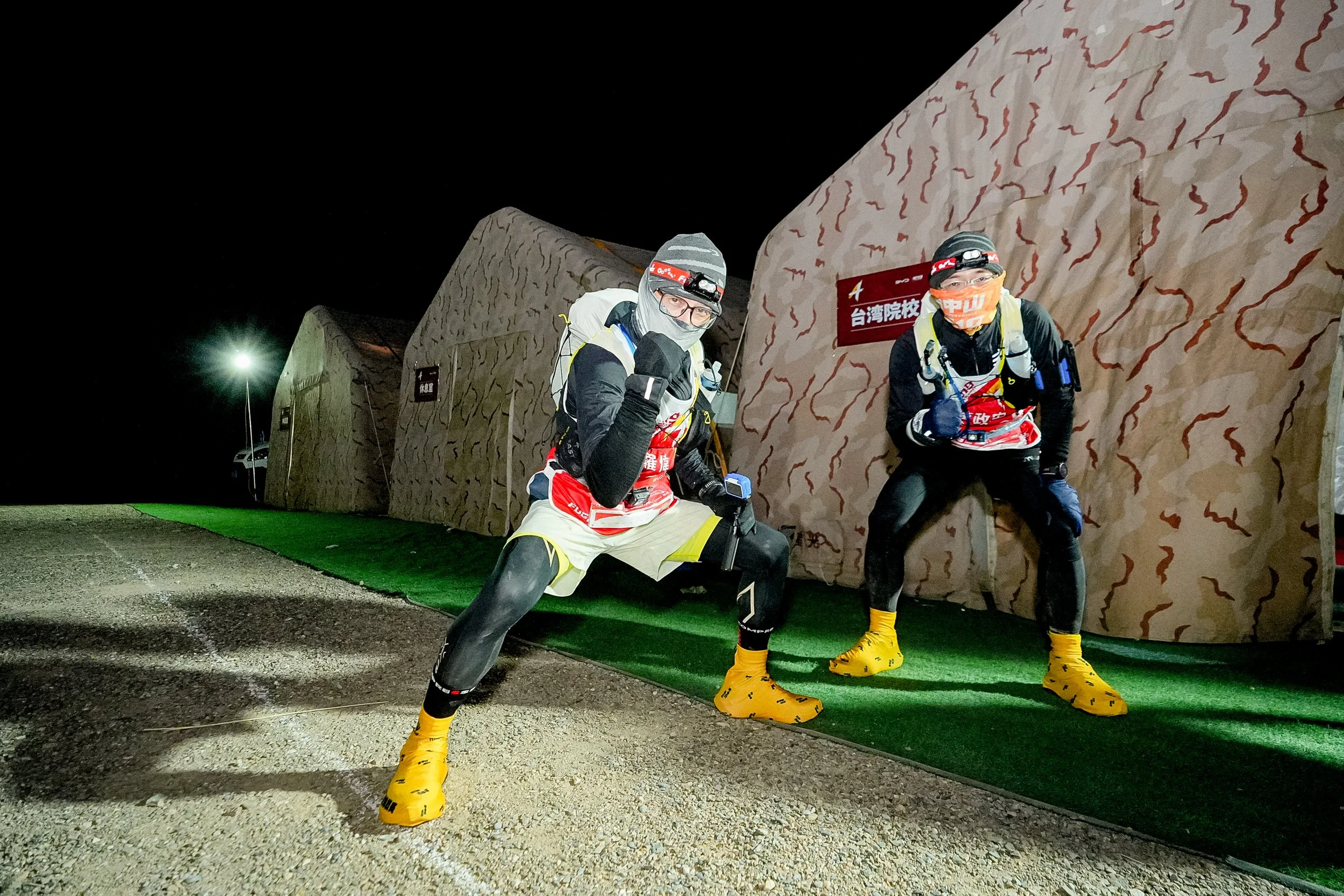
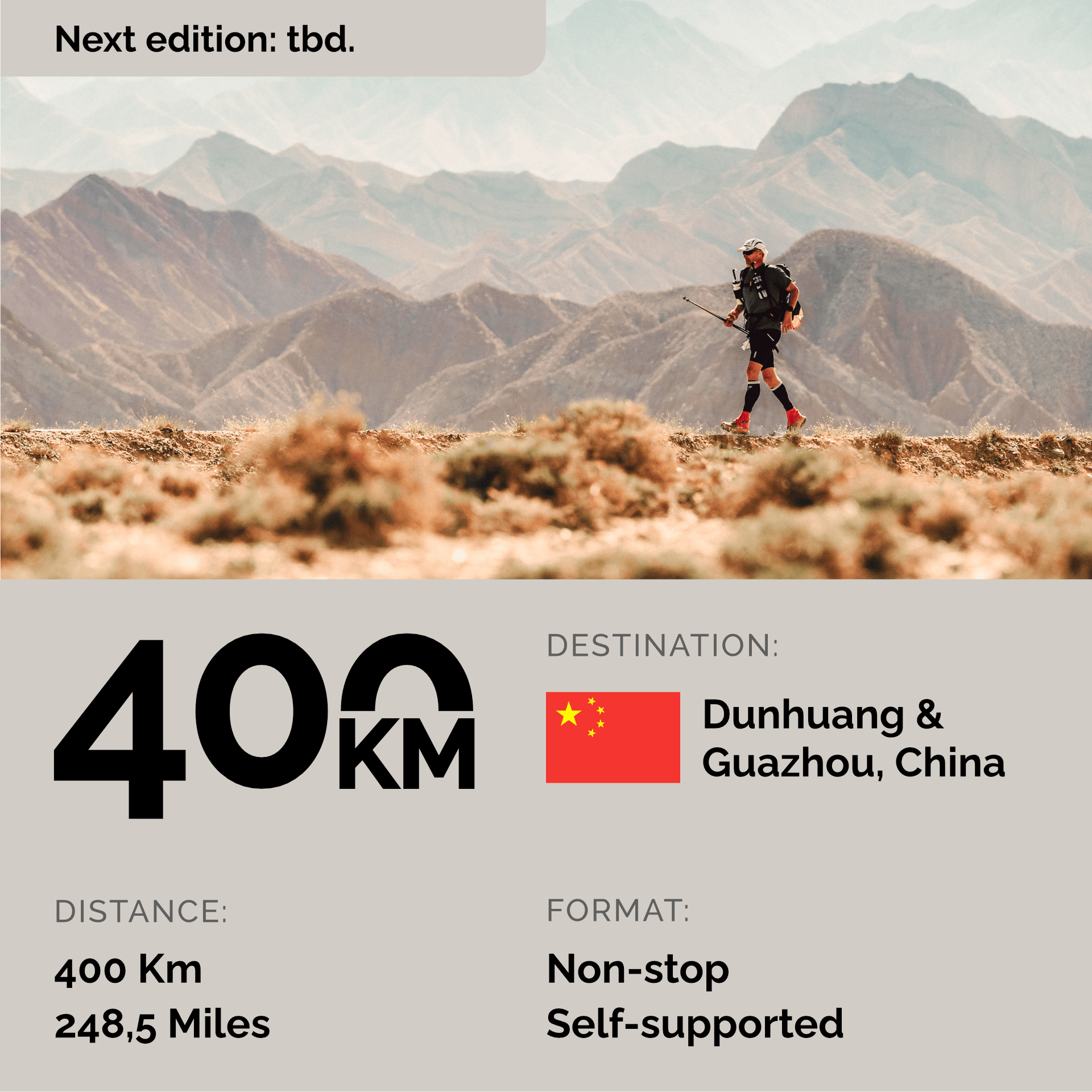
The Ultra Gobi 400km is China's first ultra-distance, nonstop, self-navigated, self-supported endurance race. 400 kilometers through one of the most remote landscapes on earth, alone, with nothing but what you can carry.
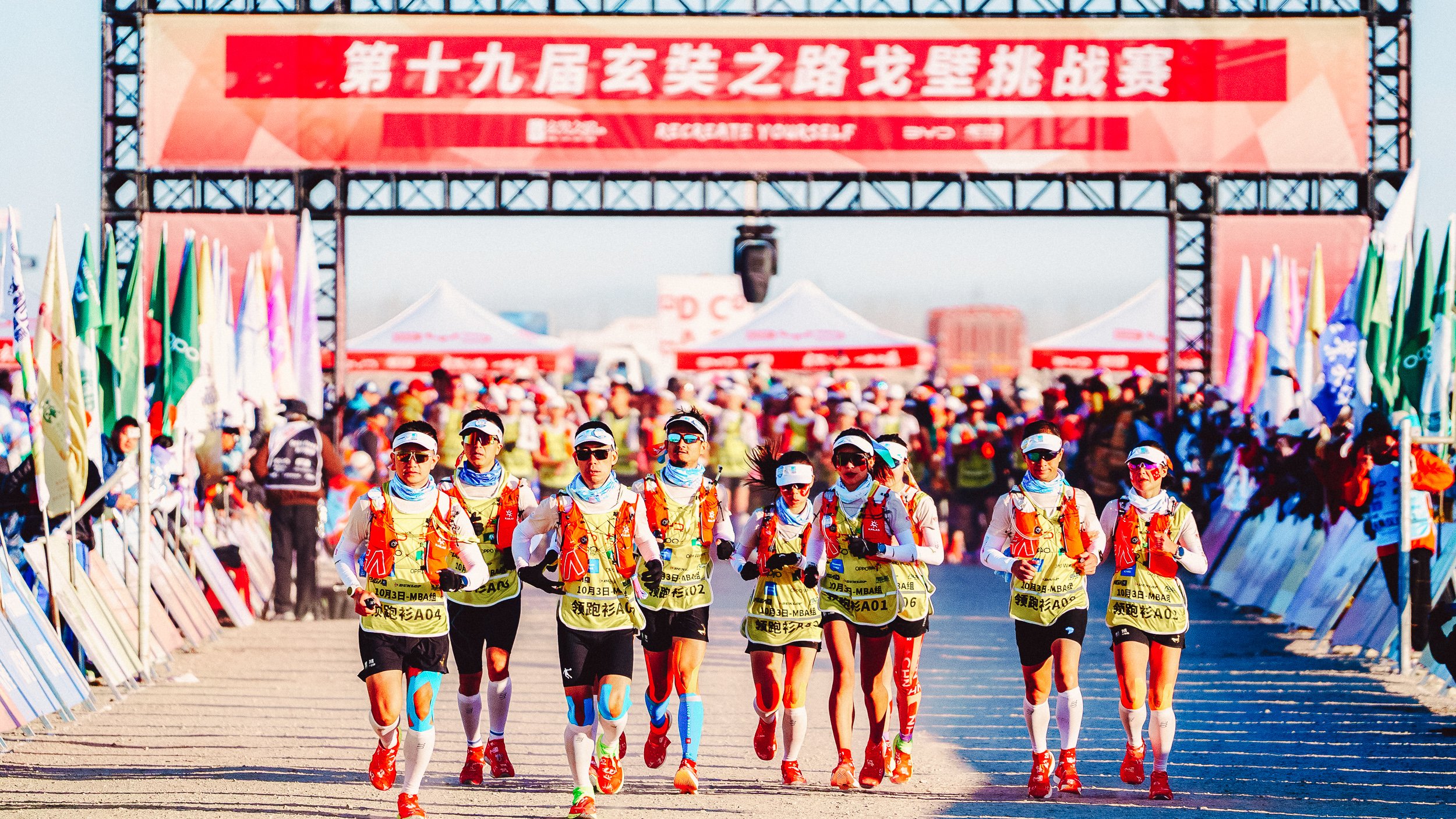
Since 2015, the event has been held 7 times. 266 runners from 27 countries across 5 continents have stood at the start line. Not all of them finished. The Chinese name "八百流沙" (800 Li of Quicksand, where 800 Li converts to 400km) refers to the vast desert stretching from Guazhou to Hami in Northwest China, a passage that travellers have feared and revered for over a thousand years.
At a Glance
Distance: 400km
Cutoff: 140 hours
Navigation: Self-navigated via personal GPS device
Support: Self-supported between rest stations
Participants: 50 athletes per edition
Total event duration: Approx. 9 days
Terrain: Desert, gravel, sand, rocky passages, dry riverbeds
Difficulty: Extreme. Open only to experienced ultra-distance runners.
Total elevation gain: Approx. 3,000m
Format: Solo, nonstop
The Course
The 400km course changes every year. That is part of the concept. The organizing team remeasures and redesigns the route for each edition to protect the natural environment and keep the challenge fresh for returning runners.
Over 80% of the course crosses uninhabited terrain. Participants navigate via GPS using checkpoint coordinates provided before the race. The organizing committee provides a recommended route connecting each checkpoint, but runners are free to chart their own path between them.
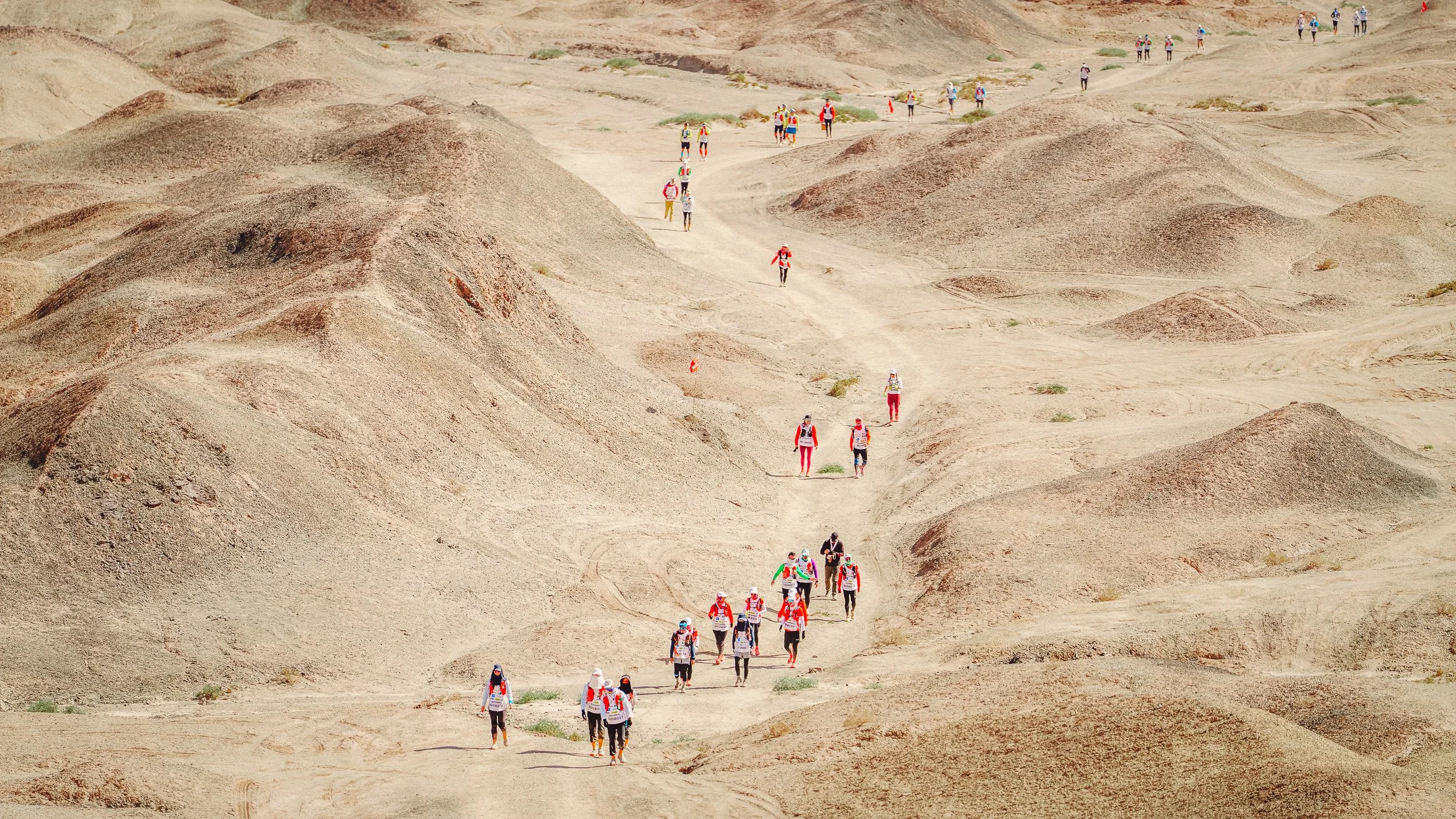
Underfoot, the terrain shifts constantly: firm desert plains, gravel tracks, dry riverbeds, sand sections, rocky passages, and at higher elevations, alpine meadows and canyon crossings. There are no long technical trails, but the variety of surfaces demands constant adaptability.
📎 GPX and KML files will be published before each edition.

On the Course
-
This is a nonstop race through a remote, largely uninhabited part of the Gobi Desert. Support along the course is intentionally minimal.
Rest stations are placed approximately every 40 kilometers (10 stations total). At rest stations, participants can access their personal drop-off boxes, packed and handed over before the race. Communal tents, sleeping mats, and hot and cold drinking water are provided. There is no time limit at rest stations.
Checkpoints are placed roughly every 8 to 12 kilometers between rest stations. Their primary role is safety and tracking. Water is available at checkpoints, but no additional supplies or rest facilities are provided. Maximum rest time at a checkpoint is 2 hours.
Between checkpoints, on the open course, the maximum rest time is 1 hour. Exceeding rest time limits results in time penalties.
Drop-off boxes: Each participant receives standardized storage boxes (54 x 40 x 33 cm, max 10.5 kg each) for each rest station. Boxes must be packed and handed over before the race. The organizing committee transports them to the corresponding rest station. There is no transfer service between stations during the race.
-
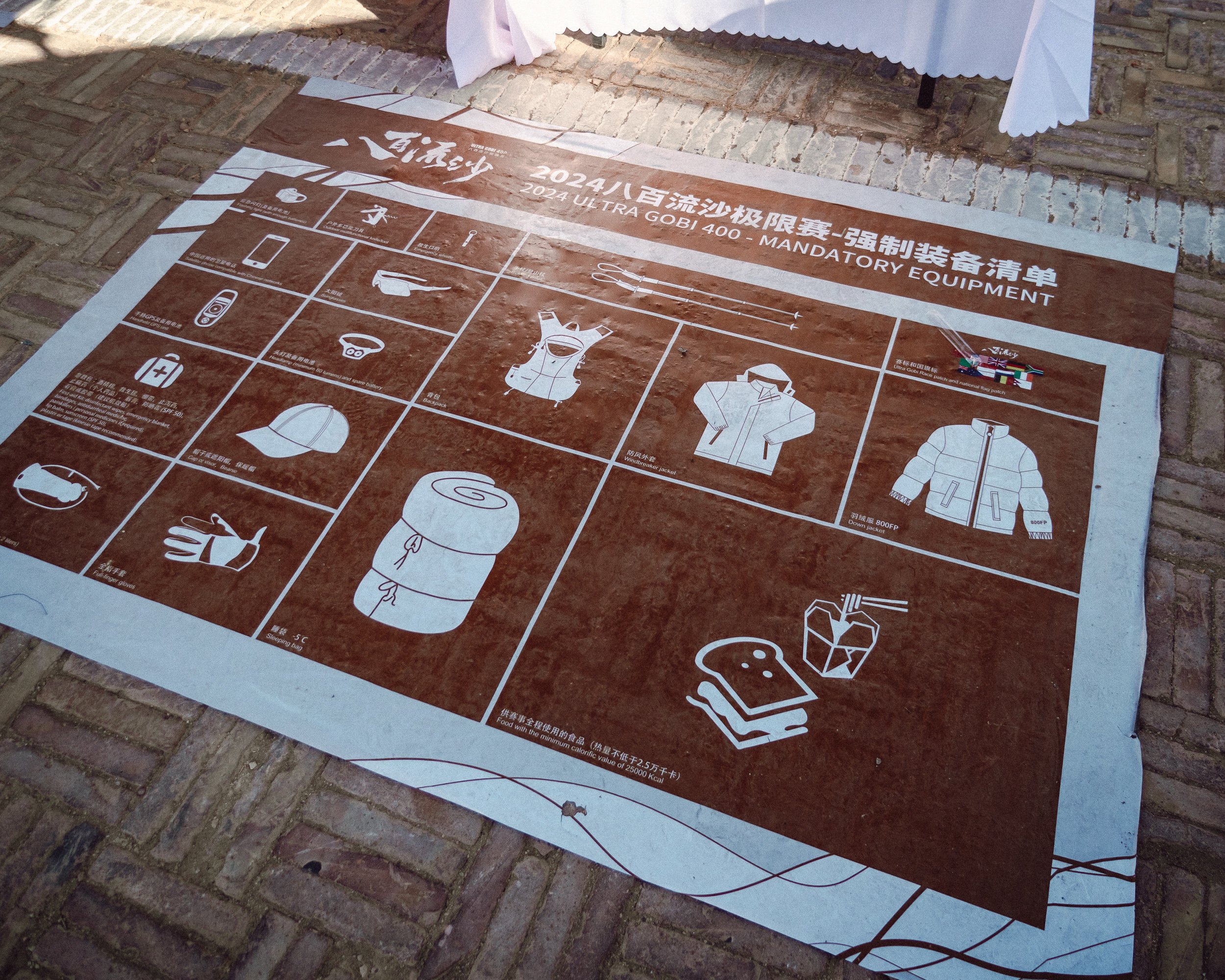
The Ultra Gobi 400km is a fully self-supported race. Between rest stations, you carry everything you need: food, personal medication, and all mandatory equipment.
Mandatory gear inspections take place at the start line and at designated checkpoints during the race. Missing items result in time penalties or, in serious cases, disqualification.
All participants must wear a "Gobi Eye" GPS tracker provided by the organizing committee for real-time location tracking throughout the race.
The full mandatory equipment list is published in the Race Regulations. Key items include navigation equipment (personal GPS device), emergency shelter, headlamp, first aid supplies, and sufficient food between rest stations.
-
Every runner wears a GPS tracker ("Gobi Eye") provided by the organizing committee, allowing the race team to monitor all participants in real time.
Checkpoints are positioned every 8 to 12 kilometers along the course. Trained volunteers and race officials are stationed at all checkpoints and rest stations. Medical staff are available on the course and at designated rest stations.
If a runner needs assistance, the GPS tracker has an emergency alert function. The race committee can dispatch support to any location on the course.
Participants who withdraw can enter a 30-minute observation period before formally signing a withdrawal declaration. One re-entry per race is permitted (with a 3-hour time penalty), subject to medical clearance and approval by the Race Director.
All participants must carry personal navigation equipment and be proficient in its use. The course is not marked. Self-navigation is a core element of the race.
Planning & Logistics
-
⚠️ The schedule below is from the 2025 edition and serves as a reference. The schedule for the next edition will be confirmed upon registration opening.
October 1st: Runners Meet & Greet Welcome Dinner
October 2nd: Race Bag Pick-up and Race Briefing
October 3rd: Opening Ceremony. Race start at 21:30
October 3rd to 9th: Race in progress (140 hrs cutoff)
October 9th: Awards Ceremony and Departure
-
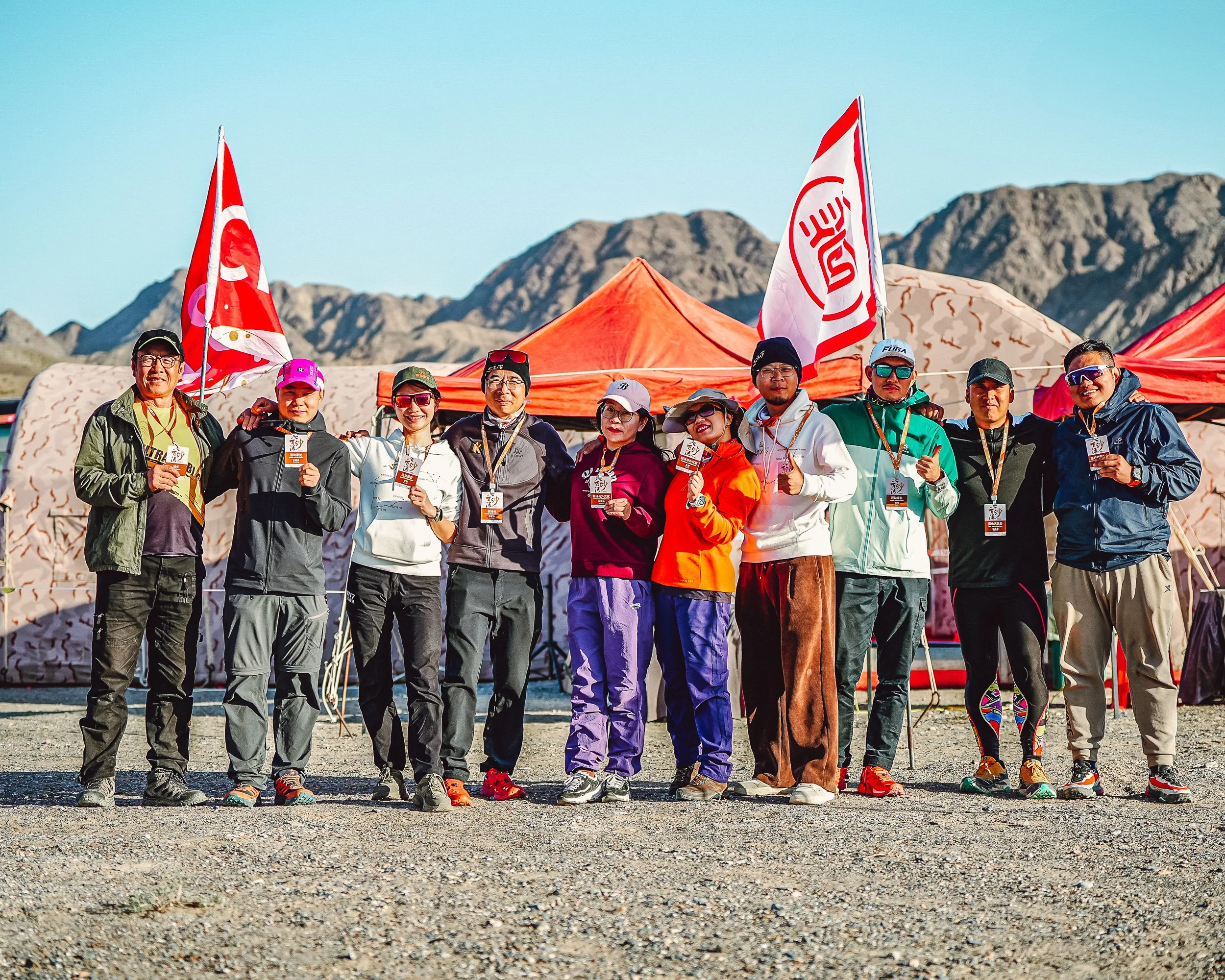
The Ultra Gobi experience begins with one or two hotel nights in Dunhuang before the group travels together to the race start. This time allows participants to arrive, recover from travel, and attend the welcome dinner and race briefing.
At the start and finish locations, each participant is provided with a private, comfortable desert tent. These tents also serve as secure storage for equipment not needed during the race.
The desert camp is fully equipped: warm and cold meals, showers, toilets, and on-site medical support. After completing the race, all participants and finishers gather in camp and remain together until the official cutoff time has passed. The shared moment leads into the award ceremony and the closing banquet.
Participants only need to arrange their travel to and from Dunhuang. From the moment you arrive, the Ultra Gobi team takes care of everything else.
We strongly recommend planning additional time in Dunhuang before or after the event. The region offers extraordinary cultural and natural highlights to explore.
Registration & Pricing
-
ncluded:
Race bib and race pack
Medal (tiger tally) and finisher t-shirt
Communal tents, sleeping mats and drinking water at rest stations
Drop-off box service
Airport pickup and dropoff from Dunhuang
Shuttle to and from race start and finish
Welcome banquet
Award ceremony
Professional race photos and videos
GPS tracker ("Gobi Eye") for the duration of the race
Not included:
Round-trip travel to and from Dunhuang
Accommodation in Dunhuang before and after the race
Personal food and supplies during the race (other than hot/cold drinking water at stations)
Personal expenses
Travel and medical insurance (strongly recommended)
-
Eligibility:
Minimum age: 18 years
Mandatory: completion of at least one 100-mile/160km (or longer) nonstop race within the past two years, finished within the official cutoff time
Medical clearance required: ECG report, blood pressure report, and signed Health Declaration (all dated within 3 months of the race)
Slot allocation (50 global slots):
Slots are allocated by continent based on population: Asia (30), Africa (7), Europe (5), Americas (7), Oceania (1).
In addition, up to 5 "Piaoqi Marshall" entries are reserved for finishers of the 2014 course measurement race,.
-
Before 18:00 on July 15: Full refund. No administrative fee will be deducted.
From 18:00 on July 15 to 24:00 on August 9: A 10% administrative fee will be deducted from the registration fee.
From 00:00 on August 10 to 12:00 (noon) on August 28: A 30% administrative fee will be deducted from the registration fee.
After 12:00 (noon) on August 28: No refund will be issued.
Note: Refunds cover the principal amount only. Any remaining balance will be returned to the original remittance account, settled and refunded in RMB. Exchange rate fluctuations and transaction fees are the responsibility of the participant. The Organizing Committee is not liable for any interest on the refunded amount.

Hall of Fame: the 2025 podium
-
![]()
Cody Poskin (USA)
2025 Men’s 1st Place
64:49:32 -
![]()
Jovica Spajić (Serbia)
2025 Men’s 2nd Place
68:20:38 -
![]()
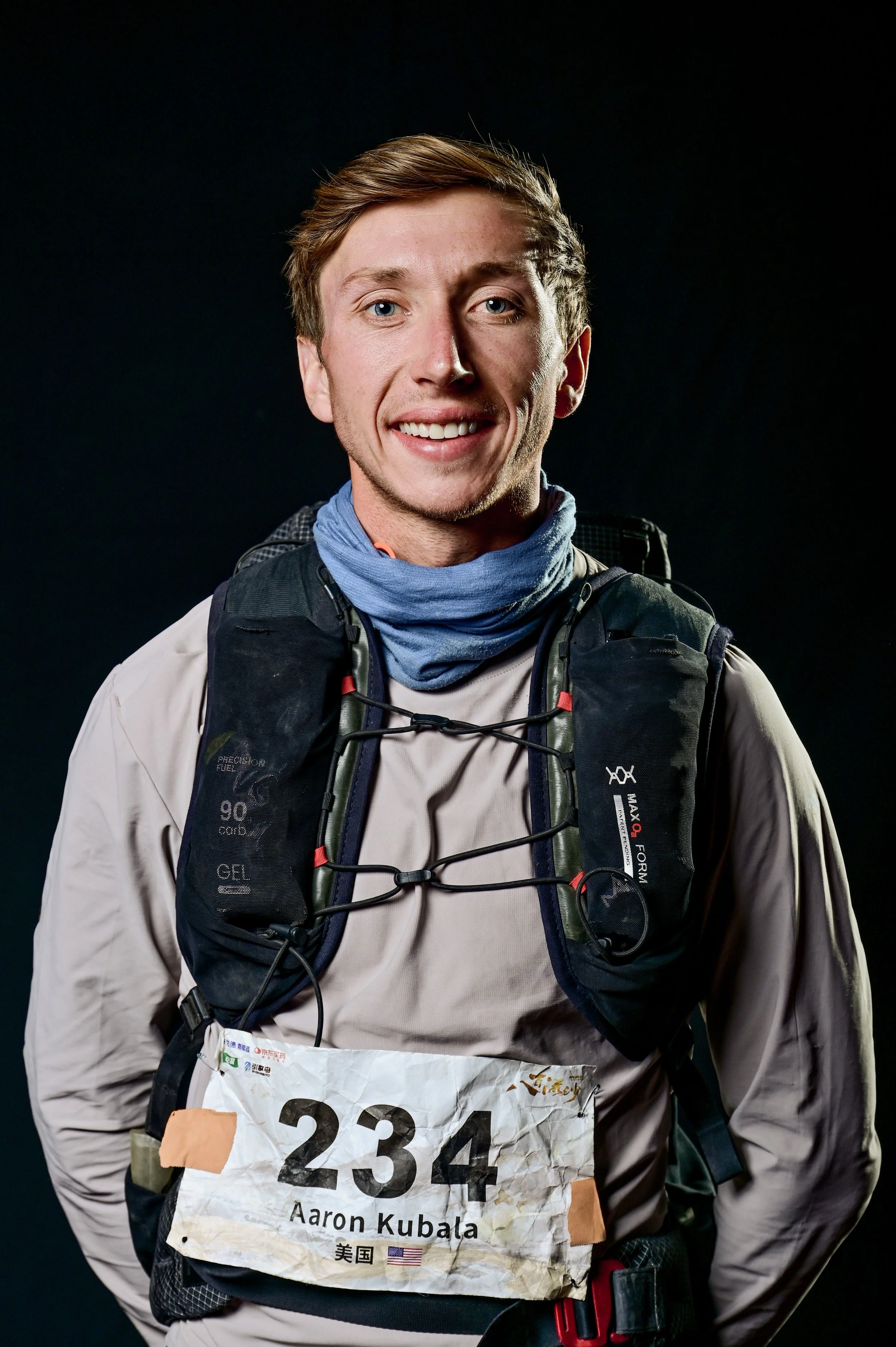
Aaron Kubala (USA)
2025 Men’s 3rd Place
68:28:38 -
![Close-up of two smiling tennis players, a woman on the left and a man on the right, with a digital scoreboard overlay showing names Zheng Junyue and Guanjun Marshall, and a time of 79:43:19.]()
Junyue Zheng (China)
2025 Women’s 1st Place
92:24:55 -
![]()
Lucy Schodell (USA)
2025 Women’s 2nd Place
94:27:58 -
![Close-up of two female athletes' faces, one wearing sunglasses and the other wearing a white cap, with a digital timer display and Chinese characters, indicating a sporting event or competition.]()
Guo Yang (China)
2025 Women’s 3rd Place
108:55:07





WHAT PAST PARTICIPANTS ARE SAYING
Destination
The race takes place near Dunhuang, in Gansu Province, Northwest China, about 2,000 kilometers west of Beijing. The region sits at the heart of the ancient Silk Road, where desert, oasis and centuries of history converge in one of the most compelling landscapes on earth.
Dunhuang is easily accessible by air, with direct flights from major Chinese cities. Travel time from Beijing is around three to four hours.

FAQs
-
Race dates will be announced soon.
-
Around Dunhuang, Gansu Province of Northwest China. A culturally rich part of the historical Silk Road.
-
You can download and view the 2025 Race Regulations here
-
USD $3,500
Registration includes:
Race bib & race pack
Medal (tiger tally) & finisher t-shirt
Communal tents & mats & drinking water at rest stations
Drop-bag services
Airport pickup/dropoff from Dunhuang
Shuttle to/from race start and finish point
Welcome banquet
Award ceremony
Professional race photos & videos
Registration does not include:
Round-trip tickets to/from Dunhuang
Accommodation in Dunhuang prior and after the race
Personal supplies during the race (other than hot/cold drinking water)
Personal expenses
-
The 2025 entry criteria will be announced alongside the Race Regulations.
For reference, the 2024 race entry criteria required participants to provide proof of long-distance race completion, specifically demonstrating that they had finished at least one 100mile/160km race between January 1, 2023, and July 20, 2024.
-
To guarantee an exclusive experience, registration is limited to just 50 global entries. In addition, we will offer five "Gobi Dreamer” slots as well as some guaranteed starting slots for our “Great Generals” (returnees from the pioneering 2014 test race).
-
Men's race record: Cody Poskin (USA), 64:49:32 (2025 edition).
Women's race record: Junyue Zheng (China), 79:43:19 (2024 edition).
-
You can find the results of previous editions in this news article: Race Results 2014-2024
-
Weather in the Gobi around Dunhuang in early October is typically cool and dry with occasional strong winds. Average temperature around 19°C, with highs reaching 28°C during the day and lows dropping to -3°C at night. Temperature swings of 30°C within a single day are common. Mandatory equipment rules are strictly enforced to keep participants safe.
-
Citizens of 50 countries, including most EU member states, the UK, Australia, New Zealand, Japan, South Korea, Brazil, Canada and several Gulf states, can enter China visa-free for up to 30 days. All other nationalities require a Chinese tourist visa (L-visa). Check current requirements at visaforchina.org.